Discovery
When content scales, but context is missing
Mediahuis is an independent news publisher with a clear mission: to tell reliable and diverse stories across text, audio, and video. With leading news brands such as De Telegraaf, NRC, Dumpert, and Metro, Mediahuis reaches a large audience every day. Video plays an increasingly important role in this. Collectively, Mediahuis’ news brands generate around 65 million video views per month. Every day, large numbers of videos are produced, stored, and distributed.
At the heart of this workflow is Zebra: the in-house developed Media Asset Management system. Technically, Zebra integrates well with the rest of the chain, from CDN and CMS to frontends and players. However, its functional value depends heavily on input and that is where the challenge lies.
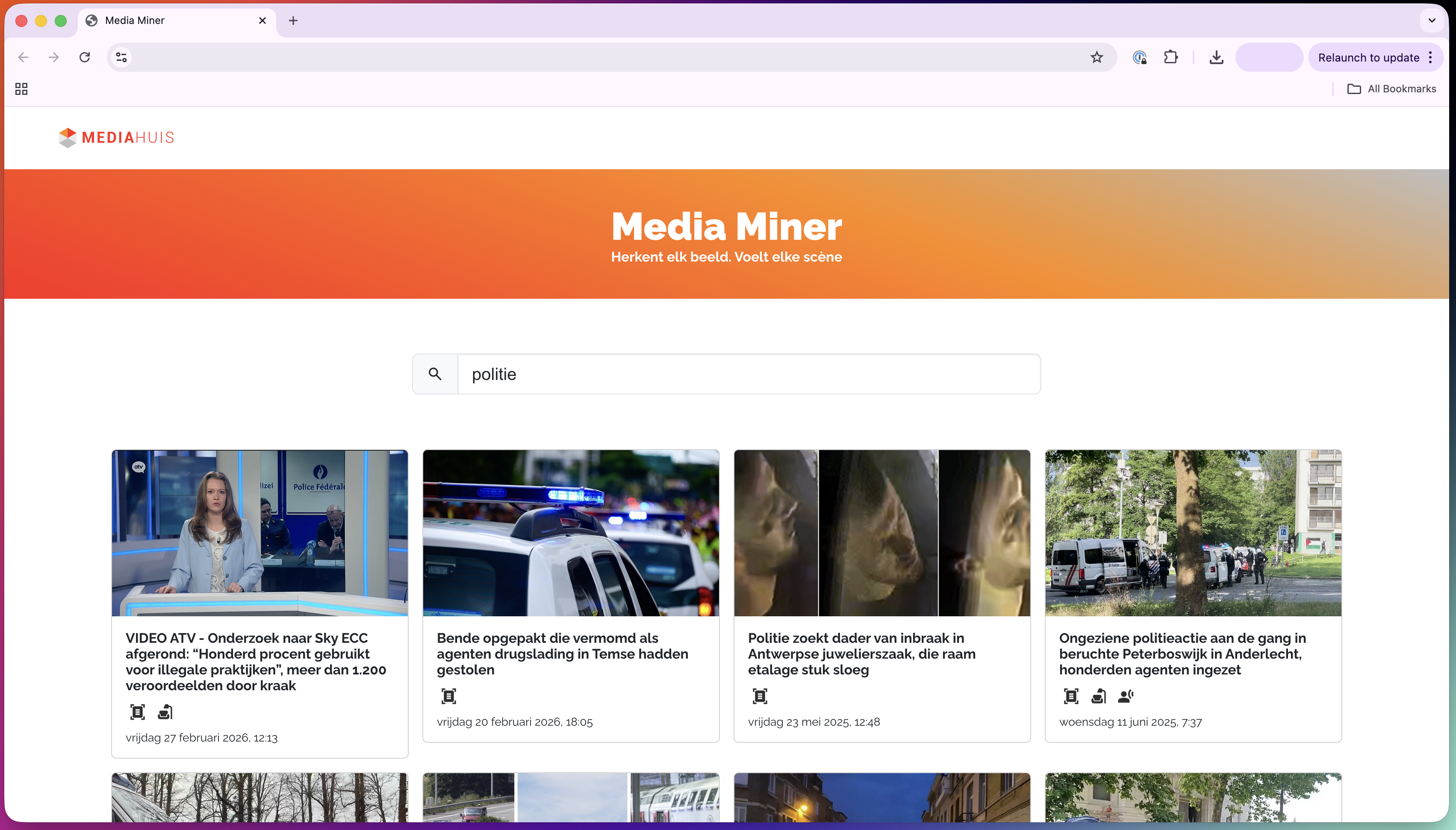
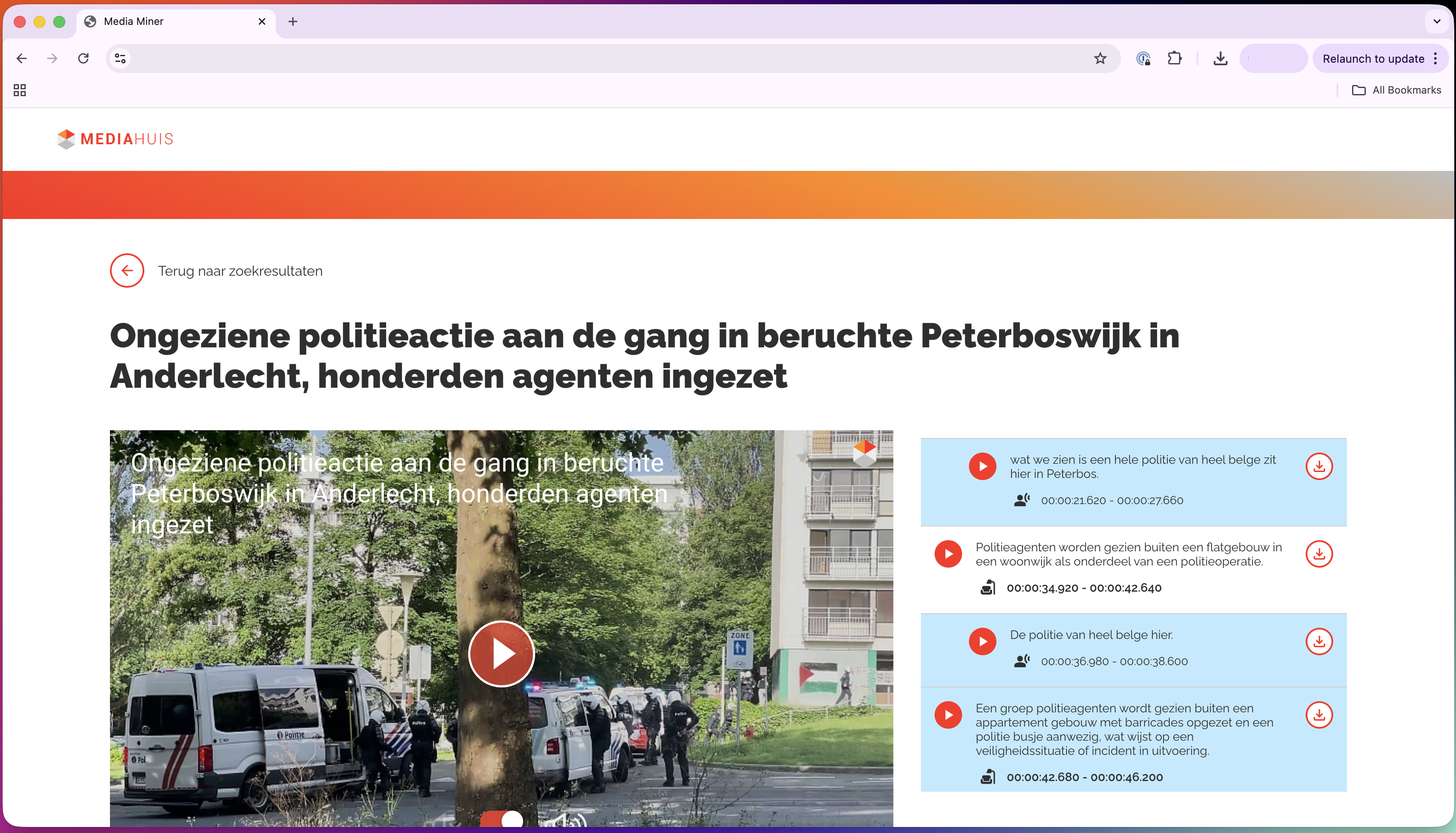
Videos are stored with minimal metadata. Usually a title, sometimes a short description, but often little more than a file name. Additional context such as topics, people, locations, or relevant fragments is missing. Not because the information doesn’t exist, but because manually enriching content under editorial time pressure is simply not feasible.
The result is a rapidly growing database of more than 400,000 video assets that are difficult to search. Existing footage is hard to find, leading editorial teams to re-film, purchase external content, or leave valuable material unused. This costs time, money, and journalistic impact.
Mediahuis wanted to break this pattern, without adding extra pressure on the editorial team. Manual tagging was not an option. External SaaS solutions proved costly and introduced risks in terms of data, privacy, and dependency. The need was clear: a solution that enriches content automatically, integrates with the existing workflow, and runs fully in-house.